
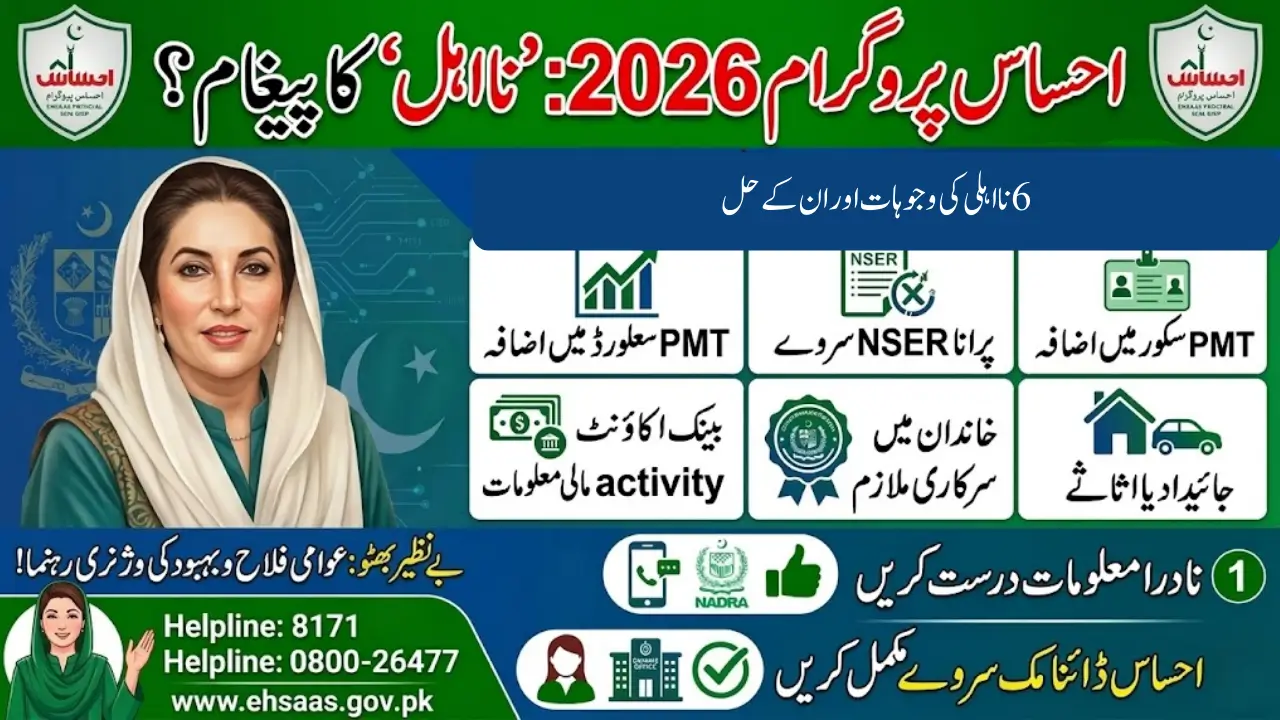
Ehsaas Program Ineligibility 2026
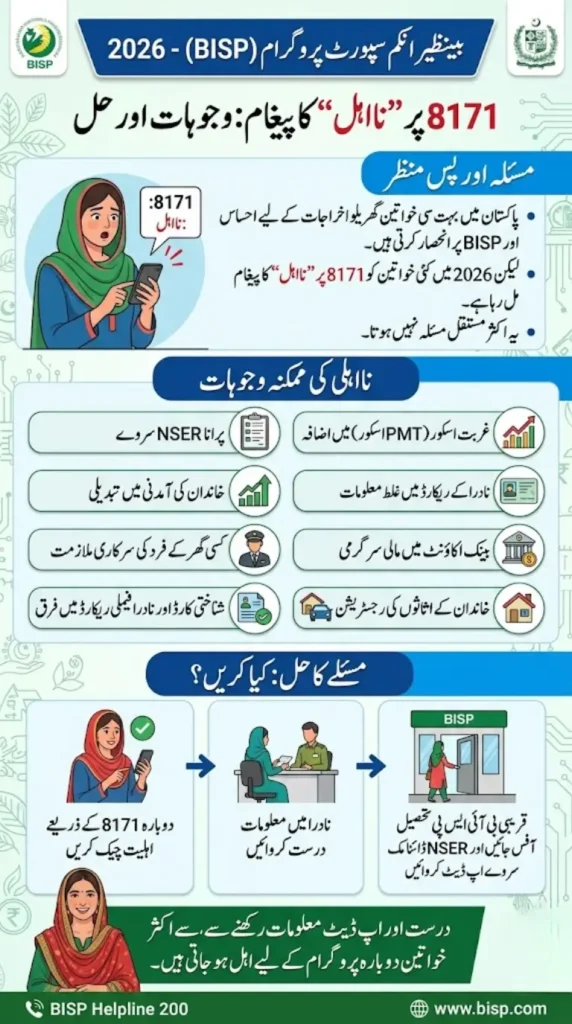
The Ehsaas Program ineligibility issue in 2026 has affected many women who depend on financial assistance through the Benazir Income Support Programme. In most cases, applicants are declared not eligible due to increased poverty score, outdated NSER survey information, NADRA record mismatches, bank account activity, or government employment within the household.
These factors can change eligibility status in the 8171 verification system. However, the issue can often be resolved by updating CNIC details, completing a new NSER dynamic survey, correcting family records with NADRA, and rechecking eligibility through the 8171 portal or BISP office. Keeping personal information accurate is important to maintain eligibility.
Quick Information – Ehsaas Program Eligibility System
| Detail | Information |
|---|---|
| Program name | Ehsaas Program and BISP |
| Verification system | National Socio-Economic Registry (NSER) |
| Eligibility check | 8171 portal or SMS |
| Key factor | Poverty Means Test score |
| Target beneficiaries | Low-income families, mainly women |
| Common issue | Ineligibility due to data updates or record mismatch |
How Ehsaas Program Eligibility Is Determined
Eligibility for the program is decided through the National Socio-Economic Registry database. This system collects household information across Pakistan and calculates a poverty score for each family.
Several factors are considered when deciding eligibility. These include:
- Poverty Means Test score
- Household income details
- Property or assets owned by the family
- Utility bills and financial activity
- Family records stored with NADRA
Even small updates in these records can affect a family’s eligibility status.
For example, if a household registers a vehicle or a family member starts earning income, the system may increase the poverty score.
Common Reasons Women Are Declared Ineligible for Ehsaas Program
Many applicants assume they were removed from the program unfairly. In reality, the system usually identifies certain data changes that affect eligibility.
Below are some of the most common reasons.
PMT score increased for Ehsaas Program
The poverty means test score is one of the most important indicators used by the system.
If the system detects improved financial conditions, the score may rise above the limit required for assistance.
This can happen if:
- A family member receives a government job
- Household income increases
- New assets such as land, a motorcycle, or a car are registered
- Financial records show improved economic conditions
When the score crosses the threshold, the system may mark the household as not eligible.
Outdated or incorrect NSER survey
Another common issue is outdated survey information.
Many families completed their NSER registration several years ago. Since then, household circumstances may have changed.
Common problems include:
- Incorrect marital status
- Husband listed as employed when unemployed
- Family members not updated in records
- Household information not revised
Without a recent dynamic survey, the system may continue using old data.
NADRA record mismatch
Eligibility also depends on identity records stored with NADRA.
If CNIC details do not match family registration data, the system may show ineligibility.
Possible causes include:
- Expired CNIC
- Marital status not updated after divorce or widowhood
- Family member records missing or incorrect
Checking the family registration certificate can help confirm whether information is accurate.
Bank account activity
The verification system now checks financial transactions in some cases.
A household may be flagged if:
- Large deposits appear in a bank account
- Active financial accounts are linked to the family
- Transactions suggest higher income levels
Even if the funds belong to another household member, the system may still consider them during verification.
Government employment in the household
Families may also be disqualified if someone in the household works in a government department.
This may apply if:
- The husband is a government employee
- A son or close family member has a government job
- Salary records appear in official databases
Since the program targets the poorest households, stable government income may affect eligibility.
What to do if you are declared ineligible for Ehsaas Program
Receiving an ineligible status does not always mean the decision cannot change. Many women regain eligibility after correcting their records.
Possible steps include:
- Visit the nearest BISP Tehsil office
- Request an updated NSER dynamic survey
- Update CNIC and family information with NADRA
- Recheck eligibility through the 8171 portal
- File a complaint if the information is correct but the issue remains
After records are updated, the system may review the case again.
Important tips for women applicants to apply Ehsaas Program
Applicants can avoid many problems by keeping their information accurate and updated.
Helpful suggestions include:
- Keep CNIC valid and updated
- Inform officials about changes in family status
- Provide correct information during surveys
- Avoid dealing with unauthorized agents
- Regularly check eligibility through official channels
Since the system relies on digital records, accurate data is essential.
Real impact for families
For many women managing homes with limited resources, Ehsaas assistance is more than just financial support. It helps families buy groceries, manage household expenses, and support children’s education.
When eligibility suddenly changes, it can create stress for families already facing financial pressure. However, many issues can be resolved by updating records or completing a new survey.
Understanding how the eligibility system works can help families maintain access to the support they need.
Final words
Ehsaas Program ineligibility in 2026 has affected many applicants, but the reasons are usually connected to poverty score changes, outdated NSER information, or mismatched NADRA records.
In many cases the problem can be fixed. Updating personal information, completing a new survey, and verifying records can help restore eligibility.
For families relying on government support, staying informed and keeping records updated is the best way to continue receiving assistance.